
A single security flaw can expose thousands of financial records, even when a website uses HTTPS. Attackers increasingly target poorly protected APIs, stolen login credentials, and compromised payment-page scripts rather than attempting to break encryption directly.
Understanding how to protect financial data in web applications requires more than installing security software. Businesses must control how information is collected, stored, accessed, transmitted, and eventually deleted.
For US businesses handling payments, banking information, or customer financial records, effective protection also means meeting applicable security requirements without compromising the user experience.
Encrypt Financial Information Before Attackers Can Access It
Encryption converts readable information into protected data that cannot be interpreted without the appropriate decryption key.
However, encryption must protect information both while it travels across networks and while it remains stored.
Secure Data Transmission With TLS
Every financial application should enforce HTTPS using modern Transport Layer Security, preferably TLS 1.3 where supported.
TLS protects information exchanged between browsers, application servers, and connected services.
Developers should also enable HTTP Strict Transport Security, eliminate insecure connections, and verify TLS certificate configurations.
Protect Databases, Backups, and Encryption Keys
Stored financial information should use strong encryption, such as AES-256, where appropriate.
Database encryption alone may be insufficient if compromised application credentials provide access to decrypted records.
Organizations should therefore encrypt sensitive fields when necessary and manage keys separately through a dedicated Key Management Service.
Key rotation, restricted access, and tested recovery procedures provide additional protection.
Reduce Risk by Collecting Less Financial Data
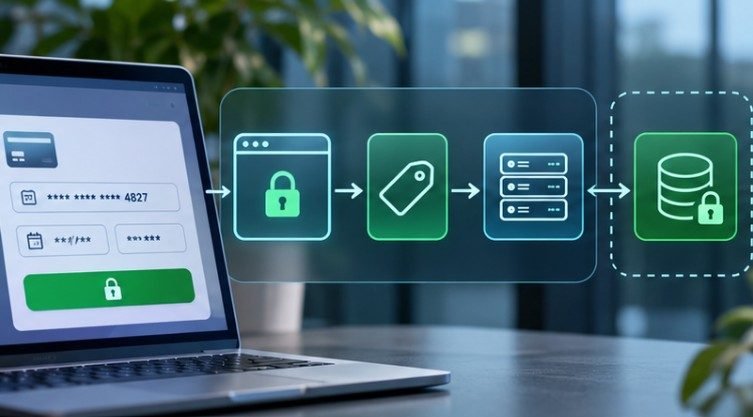
One of the most effective security improvements is eliminating information that an application does not need. For example, an online subscription platform generally does not need to store complete payment card numbers.
Instead, it can use a reputable payment processor that replaces sensitive card information with a token. Payment tokenization allows recurring billing without exposing the original card number to the merchant’s application.
Businesses should also establish retention periods, remove obsolete customer records, and prevent sensitive information from entering application logs. Reducing stored information limits the potential damage from a successful attack.
Strengthen Authentication and Restrict Financial Access
Strong identity controls help prevent unauthorized users from viewing or changing financial records.
Require Multifactor Authentication
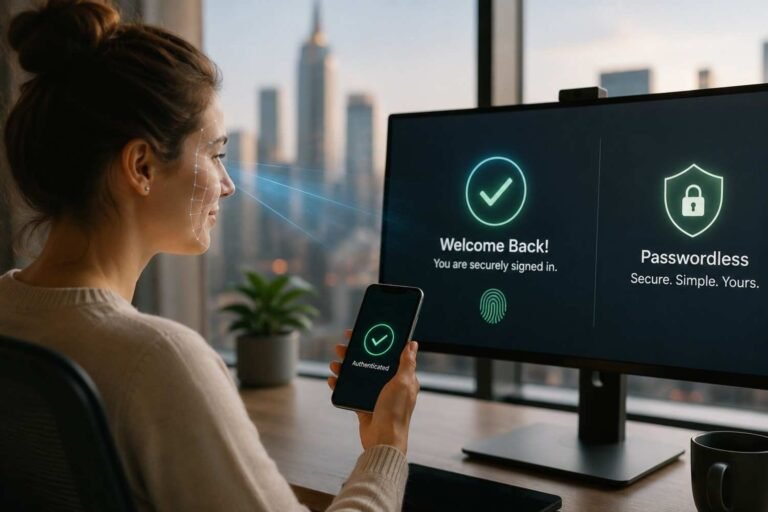
Multifactor authentication adds another verification requirement beyond a password. Passkeys and FIDO2 security keys offer phishing-resistant authentication, making them particularly valuable for administrative accounts.
The National Institute of Standards and Technology recommends phishing-resistant authentication for accounts handling sensitive information or elevated privileges.
Authenticator applications are useful alternatives, although ordinary one-time codes are not inherently phishing-resistant. Applications should also require additional verification before sensitive actions, such as changing payout destinations.
Apply Least-Privilege Access Controls
Employees, administrators, and automated services should only access information required for their responsibilities. Role-Based Access Control assigns permissions according to job functions.
However, financial applications often need additional record-level restrictions. For instance, a customer service employee may need to view transaction status without accessing full bank account details.
Permissions should be reviewed regularly and revoked immediately when no longer required.
Prevent Common Web Application and API Attacks
Secure development practices help prevent attackers from exploiting weaknesses in application code.

Stop Injection Attacks and Browser-Based Threats
Parameterized database queries protect against SQL injection by separating user input from executable commands. Input validation, contextual output encoding, and safe framework defaults reduce cross-site scripting risks.
Developers should also protect authentication cookies using HttpOnly, Secure, and suitable SameSite settings. Session expiration, secure logout, and session invalidation after credential changes further reduce account takeover risks.
Verify Authorization on Every API Request
APIs frequently expose financial information to mobile applications, customer dashboards, and business integrations.
An attacker may attempt to modify an account identifier within a request to retrieve another customer’s transaction history. This vulnerability is known as Broken Object Level Authorization.
The OWASP API Security Top 10 identifies broken object-level authorization as a major API security risk.
Every request must verify whether the authenticated user is authorized to access the requested record.
Rate limiting, request validation, and properly configured service-to-service authentication provide additional defenses.
Secure Payment Pages Against Third-Party Script Attacks
A payment form can become compromised even when the underlying database remains secure.
Attackers sometimes inject malicious JavaScript into third-party analytics tools, advertisements, or website components.
These scripts may capture payment details directly from a customer’s browser.
A restrictive Content Security Policy limits which scripts and connections a webpage can use.
Subresource Integrity can verify the expected contents of eligible externally hosted scripts.
Organizations should additionally maintain a script inventory, review third-party dependencies, and monitor payment pages for unauthorized changes.
The PCI Security Standards Council provides guidance on protecting payment pages from script-based attacks. Importantly, outsourcing payment processing does not automatically eliminate every merchant security obligation.
Understand US Financial Data Security Requirements
Different businesses face different legal and contractual requirements.
PCI DSS and Financial Privacy Rules
PCI DSS applies to organizations that store, process, or transmit payment card data, with specific responsibilities determined by their environment.
The Gramm-Leach-Bliley Act and FTC Safeguards Rule impose information security obligations on certain covered financial institutions.
California’s privacy laws may also create obligations for businesses handling qualifying residents’ personal information.
SOC 2, meanwhile, provides an independent assurance reporting framework rather than a federal regulatory requirement.
Companies operating internationally may also face GDPR obligations. Regulatory applicability depends on business activities, data handling, jurisdiction, and applicable exceptions.
Build Continuous Monitoring Into Your Security Strategy

Security is not complete once an application launches. Organizations should record sensitive account access, permission changes, administrative actions, and unusual transaction activity.
Audit logs should resist unauthorized modification and avoid containing passwords, payment credentials, or unnecessary personal information.
Automated alerts can identify suspicious login patterns, unexpected transaction increases, or unusual data exports.
Regular dependency updates, vulnerability scanning, static and dynamic application security testing, and independent penetration tests help identify weaknesses.
The US Cybersecurity and Infrastructure Security Agency’s Secure by Demand guidance emphasizes security logging, vulnerability transparency, and software supply-chain oversight.
Incident response plans should define containment procedures, recovery responsibilities, notification assessments, and evidence preservation.
A Practical Five-Step Security Assessment
Businesses evaluating how to protect financial data in web applications can start with five questions.
Step 1: Can the organization identify every database, API, vendor, and backup containing financial information?
Step 2: Are sensitive records encrypted, and are encryption keys protected separately?
Step 3: Can users access only their own financial records, even after modifying API requests?
Step 4: Are authentication controls, payment scripts, and software dependencies routinely tested?
Step 5: Can the security team detect suspicious activity and restore essential services after an incident?
Any unanswered question indicates an area requiring further assessment.
For applications processing high-value transactions, these reviews should also include transaction authorization, reconciliation, and fraud monitoring.
Frequently Asked Questions
1. What is the safest way to store financial information?
Minimize retained data, encrypt necessary records, isolate encryption keys, and restrict access. Use specialized payment providers instead of storing complete card details whenever possible.
2. How often should financial applications undergo security testing?
Run automated checks throughout development, test after significant changes, and schedule risk-based penetration testing. Critical vulnerabilities require prompt remediation.
3. Does HTTPS completely protect financial transactions?
No. HTTPS protects data in transit but cannot prevent compromised accounts, vulnerable APIs, malicious browser scripts, or unauthorized database access.
4. Can small businesses afford strong financial data security?
Yes. Managed payment services, cloud key management, automated security testing, and phishing-resistant authentication can reduce risk without requiring a large internal cybersecurity team.
Make Security a Continuous Responsibility
The biggest financial security failures often begin with overlooked details: an unnecessary database field, an overprivileged account, or an unverified API request.
Learning how to protect financial data in web applications means treating these details as essential business responsibilities rather than optional technical improvements.
Encryption, secure authentication, careful coding, compliance reviews, and continuous monitoring work best together.
No single technology guarantees complete protection, but layered safeguards significantly reduce exposure.
Start by identifying where financial information exists, remove what is unnecessary, and test whether every remaining access point is genuinely secure. A trustworthy financial application protects customer information throughout its entire lifecycle.