
Legacy software rarely becomes a problem overnight. In my experience, the warning signs appear gradually: releases take longer, integrations become harder, infrastructure costs rise, and fewer developers understand the systems keeping critical operations running. Eventually, companies realize that maintaining yesterday’s technology is limiting tomorrow’s growth.
That is where an enterprise application modernization strategy becomes valuable. Instead of rushing every legacy workload into the cloud, US organizations need a structured plan for deciding what to retain, retire, replace, migrate, or redesign. Done correctly, modernization reduces technical debt while improving security, scalability, business agility, and readiness for emerging technologies such as generative AI.
What Does Enterprise Application Modernization Actually Involve?
Application modernization is the process of improving legacy applications, infrastructure, architecture, data, and development practices so they better support current business requirements.
Modernization does not necessarily mean rebuilding everything.
A stable internal system with low maintenance costs may be worth retaining. Another application might only need to move from aging infrastructure to a managed cloud platform. A mission-critical system with serious architectural limitations could require extensive refactoring or rearchitecting.
The goal should be business improvement rather than technology replacement for its own sake.
Why Are US Enterprises Modernizing Legacy Applications?
Many US organizations manage complicated application portfolios built over years of acquisitions, internal development, vendor implementations, and technology changes.
As those environments age, technical debt can increase maintenance costs and slow product development. Unsupported platforms can create cybersecurity and compliance concerns, while tightly coupled systems make integrations more difficult.
Cloud services, automation, artificial intelligence, and real-time analytics are also changing what businesses expect from their technology.
Modern applications are generally easier to connect through APIs, scale when demand changes, automate through DevOps practices, and integrate with modern data platforms.
How Should You Assess Your Application Portfolio?

Before recommending technology changes, I would first create an application inventory.
An effective application portfolio assessment examines business value, technical health, maintenance cost, security exposure, user importance, data requirements, vendor support, and future relevance.
Evaluate Business Value and Technical Health
A useful modernization decision starts by comparing an application’s value with how difficult it has become to maintain.
A high-value application with severe technical debt may deserve immediate investment. A low-value application with serious maintenance problems may be a better candidate for retirement or replacement.
This type of application rationalization prevents companies from spending modernization budgets on systems that no longer justify the investment.
Map Application Dependencies Before Making Changes
Enterprise systems rarely operate independently.
A billing platform may depend on customer databases, identity services, APIs, reporting systems, batch processes, and third-party tools. Moving one component without understanding those relationships can create outages or unexpected project delays.
Dependency mapping helps companies organize related applications into logical modernization waves instead of treating every system as an isolated project.
Which Application Modernization Approach Should You Choose?
A strong enterprise application modernization strategy should support multiple approaches because every application has different business and technical requirements.
Rehosting moves an application to new infrastructure with minimal code changes. It can accelerate cloud migration, but it may leave technical debt largely untouched.
Replatforming introduces selected improvements, such as moving a database to a managed cloud service.
Refactoring improves existing code to make the application easier to maintain, scale, or integrate.
Rearchitecting makes bigger structural changes and may break a monolithic system into modular services or API-driven components.
Rebuilding creates a new application when the existing codebase is no longer practical to improve.
Replacing moves functionality to another product, often a SaaS platform.
Retaining makes sense when a system remains reliable, and modernization provides little immediate value.
Retiring removes applications that no longer support important business processes.
Using these approaches selectively is often more effective than forcing an entire portfolio through the same migration method.
How Do You Build an Application Modernization Roadmap?

A modernization roadmap should start with measurable business outcomes.
Before selecting technologies or defining implementation milestones, teams should establish what stakeholders actually need from the modernized application. Documenting business objectives, user expectations, functional requirements, integration needs, and technical constraints helps prevent scope changes and misaligned development efforts. Following software requirements gathering best practices can help organizations translate modernization goals into clear, actionable project requirements.
A US retailer may want faster digital releases. A financial institution may prioritize security and compliance. A manufacturer may need better integration between operational systems and analytics platforms.
Once the objectives are clear, organizations can score applications based on business value, technical risk, cost, dependency complexity, data importance, and modernization effort.
Projects can then be organized into waves.
Starting with carefully selected applications allows teams to test architecture decisions, migration procedures, governance policies, and tooling before moving highly critical workloads.
How Can Enterprises Reduce Modernization Risk?
One of the biggest modernization mistakes is attempting too much at once.
Phased execution gives engineering teams more opportunities to test changes and correct problems without putting the entire organization at risk.
Reducing these risks also depends on following consistent development standards throughout each modernization phase. Applying web application development best practices can help teams strengthen application security, maintain code quality, test functionality, and prevent performance issues as updated components are introduced.
Testing should cover application functionality, integrations, cybersecurity, performance, user workflows, and data integrity. Critical migrations should also include rollback procedures and business continuity plans.
Modernization governance is equally important. CIOs, enterprise architects, engineering teams, cybersecurity leaders, data teams, and business stakeholders need clear responsibilities and decision-making processes.
How Does Modernization Prepare Businesses for AI?
AI readiness is becoming an important part of enterprise architecture planning.
Legacy environments often trap valuable information in isolated databases, proprietary interfaces, or applications that cannot easily exchange data.
API modernization, data modernization, cloud-native architecture, and stronger data governance can make business information more accessible to analytics, automation, generative AI, and AI agents.
One practical application of these capabilities is integrating conversational AI into customer-facing software. Modernized APIs and well-structured data can help applications connect chatbot interfaces with business systems, enabling features such as automated customer support, contextual responses, and streamlined service workflows.
For teams exploring this approach, how to integrate AI chatbots into custom mobile apps offers a relevant next step in understanding AI-powered application development.
However, companies should avoid modernizing systems simply to claim they are “AI-ready.” Investments should still connect to measurable operational or customer outcomes.
How Do You Measure Modernization ROI?
Moving applications to the cloud is not, by itself, proof of success.
Businesses should compare performance before and after modernization.
Useful modernization KPIs can include infrastructure spending, software release frequency, deployment lead time, application availability, incident rates, security vulnerabilities, maintenance hours, developer productivity, transaction performance, and customer experience.
Organizations should also compare modernization investment with the long-term cost of keeping legacy systems running.
This helps executives understand whether a program is reducing total cost of ownership and creating measurable business value.
What Are the Biggest Application Modernization Challenges?
Technical complexity is only one challenge.
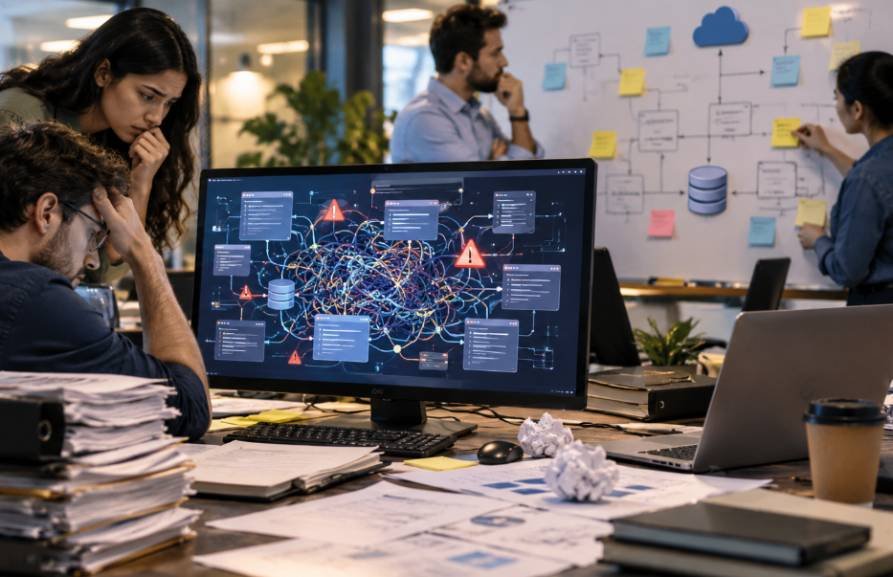
Poor documentation, hidden dependencies, outdated programming languages, inconsistent data, limited internal expertise, budget constraints, and organizational resistance can all slow modernization.
Another common problem is assuming modernization is a one-time transformation.
Technology continues to evolve. Organizations that continuously evaluate application health, technical debt, architecture, security, and business value are less likely to face another massive modernization crisis several years later.
Frequently Asked Questions
1. What should businesses modernize first?
Start with applications that combine high business importance with significant technical risk, security exposure, scalability problems, or maintenance costs. Dependency analysis should also influence sequencing.
2. Is cloud migration the same as application modernization?
No. Cloud migration changes where an application operates. Modernization can also involve refactoring code, redesigning architecture, improving APIs, modernizing data, adopting DevOps practices, or replacing the application entirely.
3. Should every legacy application be modernized?
No. Some applications should be retained, some replaced, and others retired. Application rationalization helps determine where modernization spending will provide meaningful value.
4. How long does application modernization take?
Smaller projects may take months, while complex enterprise portfolios can require multiple years of phased modernization. Application dependencies, regulatory requirements, architecture complexity, and available resources heavily influence the timeline.
5. Can modernization reduce technical debt?
Yes. Refactoring outdated code, retiring redundant systems, simplifying architecture, replacing unsupported technology, and automating development processes can substantially reduce technical debt.
Final Thoughts
When I evaluate modernization programs, I focus less on how much new technology a company adopts and more on whether that technology removes real business constraints.
The most effective enterprise application modernization strategy connects application portfolio management, technical debt reduction, cloud adoption, dependency mapping, data modernization, cybersecurity, AI readiness, governance, and measurable ROI.
For US enterprises, the better approach is rarely to modernize everything at once. Assess the portfolio, identify business priorities, choose the right modernization path for each application, and execute projects in controlled waves.
That turns application modernization from an expensive IT initiative into an ongoing strategy for improving resilience, speed, scalability, innovation, and long-term competitiveness.