SEO Checklist for a Newly Launched Website: 30 Steps That Matter

Launching a website feels exciting, but hitting “publish” does not automatically make it visible on Google. I have seen attractive new sites struggle because search engines could not crawl key pages, analytics were missing, or content targeted the wrong intent. This SEO checklist for a newly launched website helps me catch those problems before they slow growth.
I focus on technical setup, on-page optimization, Core Web Vitals, local visibility, semantic SEO, and early authority building. By fixing these essentials from day one, I give a new US-focused website a stronger chance to earn traffic, leads, and lasting organic rankings online.
What Technical SEO Checks Should I Complete After Launch?
I first connect Google Search Console, Google Analytics 4, and Bing Webmaster Tools. They help me monitor indexing, search performance, traffic, conversions, crawl errors, and sitemap status. I test calls, forms, purchases, and appointments before campaigns begin.
I activate an SSL certificate, force HTTP pages to HTTPS, and select either the www or non-www domain as the preferred version. During a redesign or migration, I redirect valuable old URLs to their closest new equivalents. These signals help search engines consolidate duplicate URL versions correctly.
Can Google Crawl and Index My Important Pages?
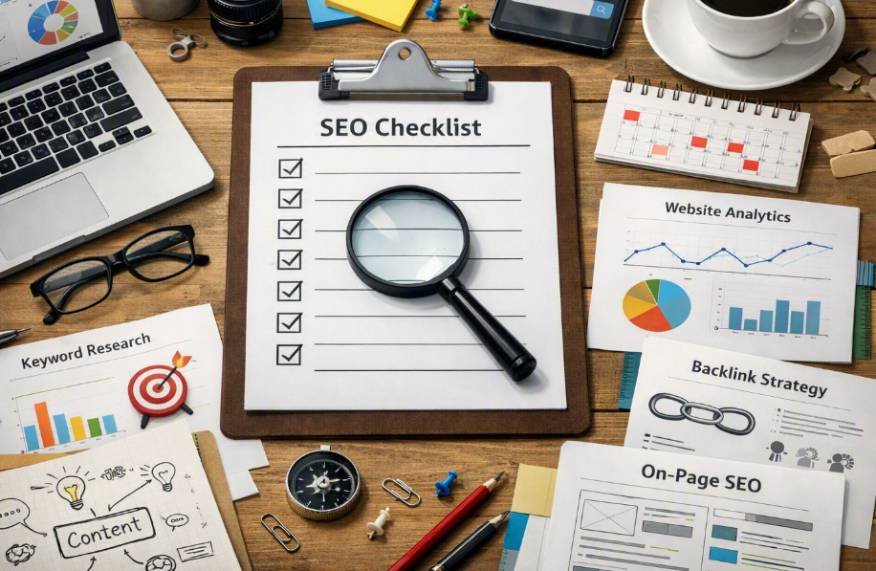
I create an XML sitemap containing only canonical, indexable URLs that return successful status codes, then submit it to Google and Bing. I inspect robots.txt, remove staging restrictions, and check for accidental noindex directives.
Robots.txt controls crawler access; it does not securely protect private content, which requires authentication or another access-control method. Google’s URL Inspection tool helps me test whether individual pages may be indexed.
I also audit broken links, 404 errors, redirect chains, mixed content, duplicate metadata, incorrect canonical tags, orphan pages, blocked resources, and thin content.
How Should I Optimize Every Page for On-Page SEO?
I assign one primary keyword theme and one search intent to each URL. A page may rank for many related terms, but it still needs one clear purpose. This keyword mapping process prevents several pages from competing for the same audience and intent.
I keep title tags below 60 characters when practical and place the main phrase near the beginning. I write a unique meta description under roughly 160 characters with a clear benefit and suitable call to action. Each page receives one descriptive H1 followed by logically nested H2, H3, and H4 headings.
I use short URL slugs with hyphens instead of underscores, random numbers, or unnecessary folders. Simple, descriptive URLs make page topics easier for users and search engines to recognize.
I compress images, define their dimensions, and add descriptive alt text to informative visuals. Decorative images receive empty alt attributes so screen readers can skip them. Google uses alt text and surrounding content to understand an image’s subject.
Internal links connect related articles, services, products, and location pages through descriptive anchor text. Every priority page should be reachable through standard HTML links rather than left as an orphan URL.
How Do I Plan Keywords, Content, and Semantic SEO?

I create a keyword map before expanding the website. For a new domain, keyword-difficulty scores below 30 can provide an initial research filter, although those scores vary between SEO tools. Search intent, topical relevance, local competition, and the strength of ranking pages matter more than one number.
I match the content format to the query. Informational searches usually need guides, comparisons, checklists, or explanations. Transactional searches need service, product, booking, or category pages.
I also build topic clusters by connecting broad pillar pages with focused supporting articles. For example, a digital marketing pillar page could connect to separate guides about technical SEO, local search optimization, keyword research, and conversion tracking.
I add accurate schema markup such as Organization, LocalBusiness, Article, Product, or BreadcrumbList when it reflects visible page content. Structured data can help Google understand a page and may qualify supported content for richer search appearances, but it does not guarantee them.
What Core Web Vitals Should My Website Meet?
I test key templates on mobile with PageSpeed Insights. Google’s good Core Web Vitals thresholds are Largest Contentful Paint within 2.5 seconds, Interaction to Next Paint within 200 milliseconds, and Cumulative Layout Shift at or below 0.1 at the 75th percentile.
I improve website speed by resizing images, reducing unused JavaScript, limiting third-party scripts, reserving space for visual elements, enabling caching, compressing files, and using dependable hosting or a content delivery network.
Because the target audience is in the United States, I test performance from US locations. I also review mobile menus, contact forms, checkout steps, tap targets, browser compatibility, and accessibility.
How Can a New US Website Build Local Trust and Authority?
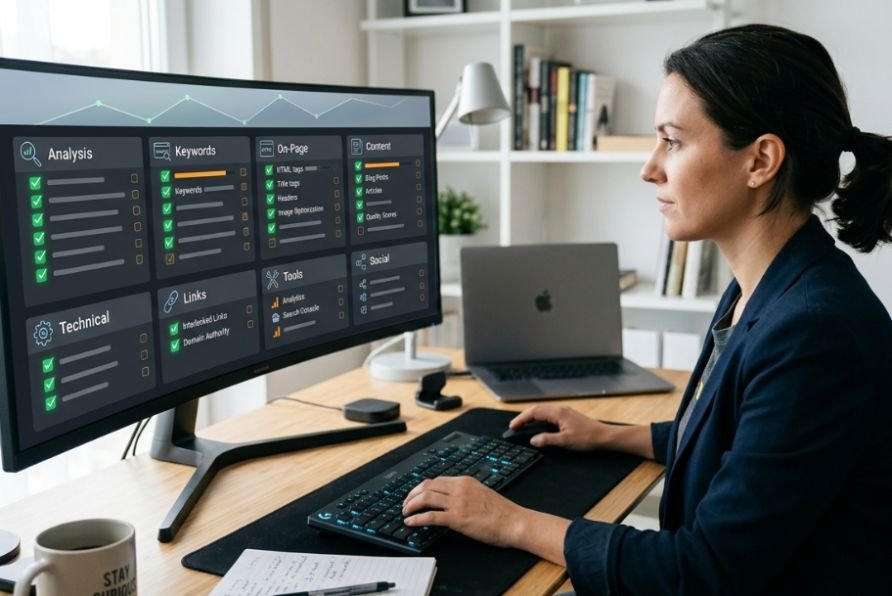
For an eligible US storefront or service-area company, I claim and verify a Google Business Profile. I maintain accurate business hours, phone numbers, categories, service areas, website information, photographs, and customer-facing details.
I keep the business name, address, and phone number consistent across the website and reliable directory citations such as Yelp, YellowPages, local chambers of commerce, professional associations, and relevant industry platforms.
I also claim consistent social profiles on LinkedIn, Facebook, and X. These profiles help establish the company’s online entity footprint, although I only create accounts the business can maintain responsibly.
For foundational backlinks, I contact vendors, suppliers, collaborators, local organizations, and professional partners with a genuine reason to mention the company. I also pursue expert commentary, useful resources, original research, community sponsorships, and digital public relations instead of purchasing bulk links.
What Should I Monitor During the First 30 Days?
I confirm that GA4 records visits and conversions, watch Search Console for indexing exclusions and sitemap errors, and inspect priority URLs. I track impressions, branded searches, long-tail keyword visibility, referral traffic, leads, calls, and sales rather than expecting immediate top rankings.
During the first month, I improve pages receiving impressions but few clicks, strengthen internal links, fix crawl problems, publish supporting content, and verify local listings. I also monitor server uptime, mobile performance, redirect behavior, conversion tracking, and newly discovered indexing issues.
Frequently Asked Questions
1. How long does a newly launched website take to rank?
Timing depends on competition, crawl accessibility, content quality, authority, and search demand. I look first for successful indexing and increasing search impressions.
2. Should I submit every page manually to Google?
I submit the XML sitemap and use URL Inspection selectively for priority pages. Strong internal links also help search engines discover new URLs.
3. Can a new website rank without backlinks?
A new website can rank for specific, local, or low-competition searches, but relevant backlinks and brand mentions usually become more important in competitive markets.
4. How often should I run a technical SEO audit?
I run an audit immediately after launch, repeat it after major releases or migrations, and schedule recurring checks based on the site’s size and publishing frequency.
Final Thoughts
A new website earns visibility through technical SEO, focused on-page optimization, useful content, fast mobile performance, consistent local signals, and credible authority. Following this SEO checklist for a newly launched website helps me correct expensive mistakes early and build a structure that can grow through stronger content and trust.
No checklist guarantees first position, but disciplined execution gives each page a better chance to be discovered, understood, and selected by the right customers.