How local SEO for private medical practices Wins More Patients
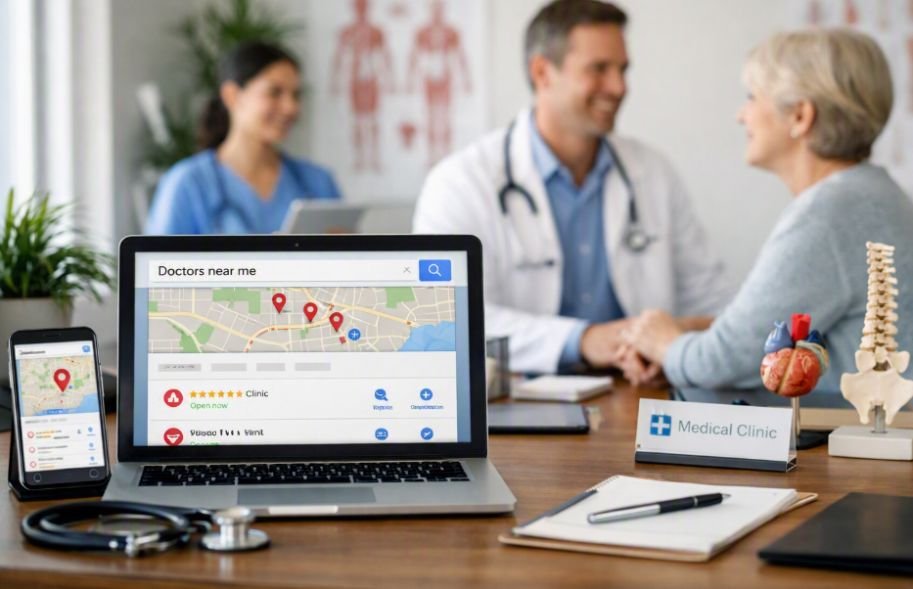
When someone needs a pediatrician, dermatologist, dentist, therapist, or primary care physician, the search often starts with “doctor near me,” “[specialty] in [city],” or a symptom-based question. I use local SEO for private medical practices to help a clinic appear when nearby patients are comparing providers and ready to book.
Healthcare content demands exceptional trust. I build every page around experience, expertise, authoritativeness, and trustworthiness through accurate information, visible credentials, clinical review, and patient-first content.
How Can a Private Practice Rank in the Google Map Pack?
The Google Map Pack places three prominent local results above much of the organic content. I cannot control distance, but I can improve relevance and prominence, the other main local ranking factors. Google officially identifies relevance, distance, and prominence as the primary considerations behind local search rankings.
I claim and verify a Google Business Profile for every clinic location, complete all core information, and choose the most specific primary category available, such as “Orthopedic Surgeon.” I add only relevant secondary categories because the categories selected can affect which local searches trigger the profile.
I upload current physician, team, exterior, reception, and parking photos. I also remove duplicates and keep the practice’s name, address, and phone number consistent across its website, Google profile, major maps, medical directories, insurance listings, and professional associations.
Should Doctors and the Practice Have Separate Google Profiles?
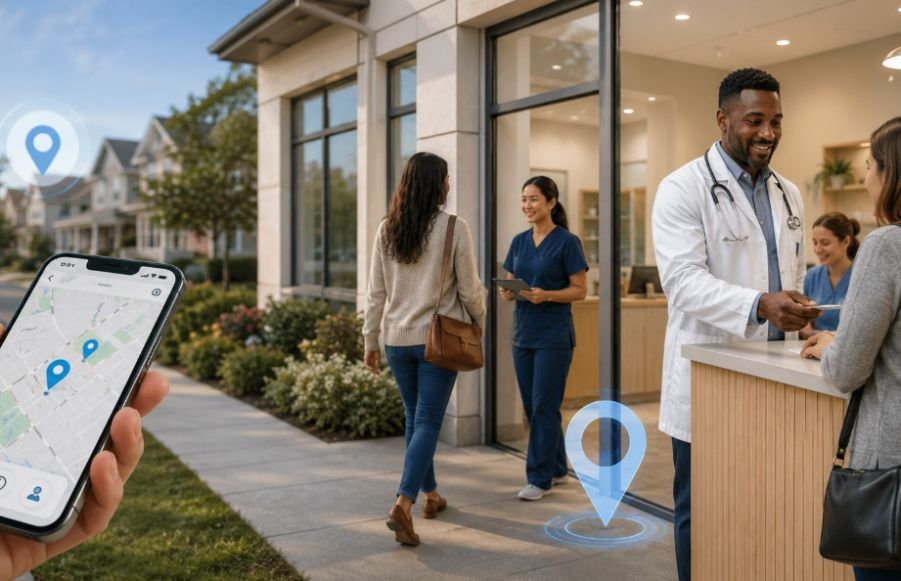
A public-facing physician contactable at a verified location may qualify for an individual profile. Multi-provider clinics may also maintain an organization profile, while a solo practitioner may be better served by one combined profile. I follow Google’s practitioner rules instead of creating listings merely to occupy more search space.
What Medical Website Pages Attract High-Intent Patients?
Patients search for symptoms, treatments, insurance, and provider types. I organize the website around that intent instead of expecting one general services page to rank for every patient need.
Condition, Symptom, and Treatment Pages
A strong condition page explains symptoms, possible causes, when to seek care, evaluation, treatments, and appointment expectations. Each major procedure should also have its own page covering eligibility, benefits, limitations, preparation, recovery, FAQs, and the next scheduling step.
This structure can help a practice target long-tail healthcare searches such as “chronic lower back pain doctor,” “pediatric asthma treatment in Dallas,” or “dermatologist accepting Medicare near me.”
Provider and Location Pages
Every physician page should show qualifications, board certifications, clinical interests, affiliations, languages, and appointment availability. Each location page should include unique directions, landmarks, parking, accessibility, hours, providers, insurance information, and services.
I use geographic phrases naturally when they reflect the real service area. I never duplicate a page and change only the city name because each clinic location should provide information that genuinely helps nearby patients.
How Does Medical E-E-A-T Improve Healthcare SEO?
I assign health articles to qualified writers and require review by an appropriate licensed professional. Each article includes an author or medical reviewer box linking to a biography with credentials, board certifications, experience, affiliations, and a review date.
I cite reliable medical evidence, maintain an editorial policy, update old pages, and distinguish education from personalized medical advice. Google describes trust as central to E-E-A-T and recommends people-first content with clear information about who created it.
These signals are especially valuable for medical websites because patients need to understand why they should trust both the information and the provider behind it.
Which Schema Markup Should a Medical Practice Use?
Structured data helps search engines understand visible page information, but it does not guarantee rankings or rich results. I use JSON-LD with accurate types such as LocalBusiness, MedicalOrganization, Physician, or another suitable medical subtype.
The markup can identify hours, address, telephone number, departments, medical specialty, and, where appropriate, a US National Provider Identifier. Google supports LocalBusiness structured data for information such as business hours and departments, while Schema.org provides medical properties including medical specialty and US NPI.
I ensure the markup matches the visible page, validate it before launch, and display accepted insurance in patient-facing content rather than hiding important details only in code.
How Can a Practice Earn Reviews Without Violating Privacy?
I use a compliant post-visit email or SMS workflow that invites patients to leave honest feedback. I never buy reviews, request only positive comments, or condition a reward on sentiment. Fresh, authentic reviews can reassure prospective patients and reveal service problems.
Even when a reviewer shares medical details, I never confirm that the person is a patient, discuss treatment, identify a condition, or reveal protected information. I respond neutrally and invite the individual to contact the office privately.
HHS has taken enforcement action against healthcare providers that disclosed patient information while responding to negative online reviews. The FTC also prohibits fake reviews and incentives that depend on a reviewer expressing a particular sentiment.
How Do Mobile Speed and Booking UX Increase Appointments?

I place a visible “Book Appointment” button near the top of key pages, add click-to-call functionality, and show insurance, referral requirements, new-patient instructions, hours, parking, and accessibility details.
I compress images, remove unnecessary scripts, simplify forms, and monitor Core Web Vitals. Google’s current good thresholds are 2.5 seconds or less for Largest Contentful Paint, 200 milliseconds or less for Interaction to Next Paint, and 0.1 or less for Cumulative Layout Shift.
A practice may rank well and still lose patients if its appointment form is confusing, its phone number is difficult to find, or its mobile pages load slowly. Local medical SEO should therefore improve both discovery and conversion.
Which Local Medical SEO Metrics Should I Track?
| SEO element | Priority | Main benefit | Primary metric |
| Google Business Profile | Critical | Maps visibility | Calls, directions, bookings |
| Condition and service pages | High | Long-tail discovery | Organic conversions |
| Medical schema | Technical | Clearer entity information | Valid markup |
| Review generation | Ongoing | Trust and click appeal | Rating, volume, recency |
| Mobile booking UX | Critical | More appointments | Calls, forms, bookings |
I track profile calls, directions, appointment clicks, forms, booked visits, completed appointments, and conversions by provider, service, and location. Rankings matter, but scheduled and completed patient appointments provide a clearer picture of whether the strategy produces business growth.
Frequently Asked Questions
1. How Long Does Local SEO Take for a Medical Practice?
Early movement may appear within several months, but competitive specialties and major US cities usually require sustained work.
2. Do Medical Practices Need Separate Pages for Every Treatment?
Major services deserve individual pages when they address distinct patient needs and provide unique, clinically accurate information.
3. Can a Doctor Respond to a Negative Google Review?
Yes, but the response should never confirm a patient relationship, discuss treatment, or reveal protected health information.
4. Is a Google Business Profile Enough to Rank Locally?
No. Strong visibility also requires useful pages, accurate citations, authentic reviews, technical performance, local authority, and a smooth appointment process.
Why Does a Complete Local Medical SEO Strategy Work?
I treat local SEO for private medical practices as a connected patient journey. Accurate listings create visibility, clinical content answers concerns, provider pages build confidence, schema improves clarity, reviews add social proof, and a fast booking experience removes friction.
I cannot guarantee first place because competition, proximity, and search behavior vary. I can build a stronger presence that makes the practice easier to find, evaluate, and contact.