How to Avoid Duplicate Content on Location Pages Before Google Tunes Them Out

A location page should feel like a front door to a real community, not a photocopy with a different city name taped across the top. When I open five city pages and find the same promises, photographs, FAQs, and service descriptions repeated word for word, I know neither customers nor search engines are learning anything new.
That is why understanding how to avoid duplicate content on location pages matters for every US business trying to grow through local search. The solution is not endless synonym swapping.
I build each page around genuine local proof, including neighborhood needs, branch staff, nearby projects, driving directions, customer reviews, service boundaries, regional pricing, and accurate technical SEO signals that give every URL a reason to exist.
Why Does Repeating the Same City Page Hurt Local SEO?
A Miami page should not read like a Tampa page after I remove the city names. Similar pages may compete for overlapping queries and create keyword cannibalization.
My test is simple: I remove the city, address, and phone number. If the remaining text could fit every branch, the page needs stronger local differentiation.
What Should Be Unique on Every Location Landing Page?
How Do I Write Hyper-Local Copy?
I describe the services customers request in that market, the neighborhoods served, and the conditions shaping demand. An Arizona roofing page might discuss sun exposure and monsoon damage, while a Colorado page may focus on hail and snow loads.
I also include genuine branch history, partnerships, sponsorships, and community involvement. BrightLocal and Sterling Sky recommend replacing address-swapped copy with local testimonials, staff details, directions, and original photography.
Which Local Proof Should I Add?
I include local projects, customer stories, and reviews that explain the problem, service, property type, and result. I never invent evidence or alter testimonials to force in keywords.
Authentic local proof differentiates city landing pages more effectively than rewriting the same paragraph with synonyms. It also shows prospective customers that the business has relevant experience in their community.
Should I Include Directions, Parking, and Accessibility?
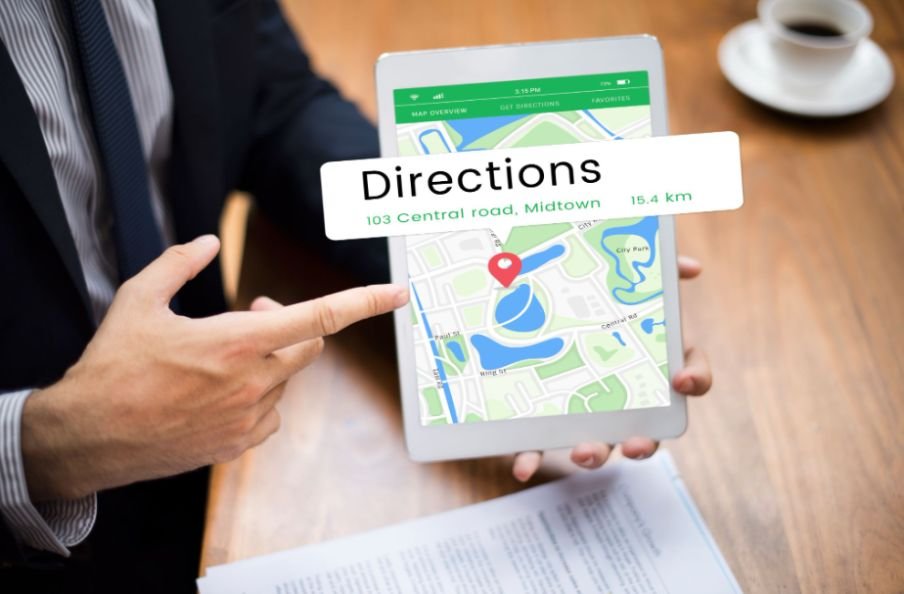
For a storefront, I publish directions using highway exits, intersections, landmarks, and transit stops. I also explain parking, accessibility, appointments, and building access.
For example, I might tell visitors which interstate exit to use, where the parking entrance is located, and whether the building has a wheelchair-accessible entrance. This is far more helpful than displaying an address beside a generic map.
I embed a location-specific Google Map tied to the correct coordinates. A standard embed is usually enough; a custom Google Maps API frame is useful only when advanced functions are required.
Do Staff Profiles and Original Photos Matter?
I feature local employees with their roles, credentials, specialties, experience, and headshots. These profiles help customers understand who works at that branch and who may handle their appointment or project.
I upload original interior, exterior, staff, parking, and project photos instead of repeated stock images. Geo-tagged metadata may organize assets, but accurate alt text, file names, quality, and authentic subjects matter more.
What Questions Belong in Localized FAQs?
I answer questions about parking, wheelchair-accessible amenities, service boundaries, response times, appointments, state requirements, and regional pricing.
When prices vary across US markets because of labor, permits, taxes, travel, or materials, I explain the difference honestly instead of creating artificial variations. Every answer should address a question that customers in that location actually ask.
How Do I Build Service-Area Pages Without Claiming Fake Offices?

A service-area page should never imply that the company has a storefront where none exists. I explain how the business serves the city, which ZIP codes or suburbs it covers, expected response times, and available services.
Google requires businesses to represent locations accurately and prohibits creating more than one Business Profile for the same location.
I may also include recent work completed in the service area, common local property types, travel limitations, and scheduling information. This gives the page a legitimate purpose without creating a fake address.
Applying strategies for how to improve local SEO without backlinks can further strengthen these pages through accurate service details, authentic reviews, consistent citations, useful local content, and clear internal linking.
Which Technical SEO Signals Should I Configure?
Following a clear approach to how to structure folders for an HTML CSS JavaScript website can keep location-page assets organized, simplify updates, prevent broken file paths, and support cleaner technical maintenance as the site grows.
Should Every Page Have a Self-Referencing Canonical?
When a location page is original, indexable, and intended to rank, I use a self-referencing rel=”canonical” tag pointing to its preferred URL. I do not canonicalize every city page to the homepage because that may identify the local URLs as duplicate alternatives.
Canonicals do not repair thin copy. I also resolve HTTP/HTTPS, trailing-slash, case, parameter, print-page, and outdated-URL duplicates.
I keep the preferred URL consistent across internal links, XML sitemaps, canonical tags, and redirects. Conflicting signals make it harder for search engines to identify the correct page.
What LocalBusiness Schema Should I Add?
I add LocalBusiness structured data with the correct name, address, local phone number, hours, URL, and relevant properties. Each page must display precise NAP information.
The visible page and schema must agree. Structured data helps search engines interpret content, but it cannot compensate for misleading or low-value pages.
For a multi-location business, I create location-specific markup rather than copying the address and phone number from the main office across every branch page.
Where Should Each Google Business Profile Link?
I set each eligible Google Business Profile’s website link to the corresponding branch landing page instead of sending every profile to the homepage. The page should match the location, contact details, hours, photographs, and services shown on the profile.
This creates a clearer journey for someone who discovers the business through Google Search or Maps. The visitor lands on information about the exact branch they selected rather than having to search the website again.
Can I Reuse the Same Location Page Template?
Yes. I reuse the layout, navigation, branding, policies, and general process while customizing introductions, services, projects, reviews, staff, images, maps, directions, FAQs, pricing, and calls to action. I collect these details from local teams before drafting.
Template consistency can improve usability and simplify website management. The problem begins only when the template controls nearly all the page’s substantive content.
When Should I Merge or Remove a City Page?
Not every city deserves a separate URL. I keep a page when the business genuinely serves the area, customers search for the service there, and I can provide useful local information.
When two pages target the same audience with nearly identical material, I consolidate them and redirect the weaker URL. Fewer strong pages beat hundreds of thin doorway-style pages.
I also review pages that receive no impressions, links, leads, or engagement. A weak page may need stronger local evidence, a broader service-area focus, consolidation, or removal.
Frequently Asked Questions
1. Is Changing Only the City Name Enough?
No. I also localize services, proof, photographs, staff information, directions, FAQs, and customer guidance.
2. How Much Location-Page Content Must Be Unique?
Google does not publish a required percentage. I focus on meaningful local value instead of an arbitrary ratio.
3. Can Several Pages Target the Same Service?
Yes, when each page represents a legitimate branch or service area and answers local search intent.
4. How Often Should I Update Location Pages?
I update them whenever hours, staff, services, coverage, pricing, photographs, reviews, projects, or access information changes.
Create Location Pages That Deserve to Rank
Understanding how to avoid duplicate content on location pages means treating every URL as a useful local destination, not another variation of the same sales page. I keep the framework consistent while customizing the evidence, customer guidance, technical signals, and conversion path.
When I combine hyper-local copy with accurate NAP details, self-referencing canonicals, Local Business schema, original imagery, maps, and matching Google Business Profile links, I create pages that serve real US customers and give search engines clearer reasons to index the right URL.