
AI adoption has raced ahead of AI autonomy. Stanford’s 2026 AI Index reports that 88% of surveyed organizations now use AI, yet agent deployment remains in the single digits across almost every business function. That gap explains why the debate over custom AI agent development vs off the shelf AI tools has become much more important for U.S. companies.
Buying an AI tool is relatively easy. Giving software permission to search company systems, interpret business rules, make decisions, and take actions is a different engineering problem.
For most businesses, the right question is not, “Which option has more AI?” It is: “Which parts of our workflow are valuable enough to justify owning the intelligence, integrations, controls, and maintenance ourselves?”
What Separates a Custom AI Agent From a Packaged AI Tool?
An off-the-shelf AI product is designed around a repeatable problem shared by many customers. Think customer-service assistants, meeting summarizers, CRM enrichment tools, writing assistants, coding copilots, or marketing automation platforms.
The vendor chooses most of the underlying architecture. Your team typically configures prompts, permissions, integrations, knowledge sources, and workflow rules. A custom agent reverses that relationship.
Your organization defines the workflow, business logic, permitted tools, data sources, approval rules, memory architecture, user interface, monitoring, and escalation behavior. The agent may retrieve internal records, call APIs, update databases, create tickets, prepare reports, or coordinate a sequence of actions. That autonomy is where much of the value—and risk—appears.
Carnegie Mellon University’s Software Engineering Institute notes that LLM agents differ from static chatbots because they interact with external tools, services, and data, creating potential pathways to real-world consequences.
Where Off-the-Shelf AI Usually Wins

Packaged software has one enormous advantage: time to value. A business can often test an established AI product within days without hiring machine-learning engineers, building orchestration layers, implementing observability infrastructure, or maintaining its own model integrations.
That makes off-the-shelf tools particularly effective for standardized tasks such as drafting emails, summarizing meetings, generating marketing copy, answering common support questions, assisting developers, and enriching CRM records.
Businesses evaluating development productivity, for example, can begin with existing AI coding assistants for web developers rather than immediately building an internal coding agent.
Vendor-managed products also shift substantial operational work away from the customer. Model upgrades, infrastructure scaling, feature releases, basic security controls, and application maintenance are generally handled by the provider.
The Hidden Ceiling
Convenience eventually becomes a constraint if your workflow does not resemble the workflow the vendor designed. You may discover that the platform cannot handle unusual approval paths, legacy databases, proprietary scoring methods, industry-specific exceptions, or complex actions across several systems.
Teams then begin building spreadsheets, manual reviews, middleware, prompt workarounds, and human handoffs around the supposedly automated product. At that point, subscription price is no longer the best measure of cost. The better metric is total workflow cost.
Where Custom AI Agent Development Creates an Advantage
Custom agents become compelling when the workflow itself contributes to competitive differentiation. Imagine a U.S. logistics company whose operations team must examine customer requirements, shipment history, carrier availability, contract restrictions, weather conditions, and internal pricing rules before recommending a shipping plan.
A generic chatbot can explain shipping options. A purpose-built agent could potentially retrieve the relevant records, apply company-specific policies, compare alternatives, prepare a recommendation, and route unusual cases to an employee. The difference is not simply personalization. It is encoded operational knowledge.
Custom development can also provide tighter control over data routing, permissions, model selection, audit logs, approval gates, integrations, and fallback procedures.
Companies building broader web systems may therefore combine existing AI tools for website development with custom agents only where proprietary automation creates measurable value.
Security Changes the Build-vs-Buy Calculation
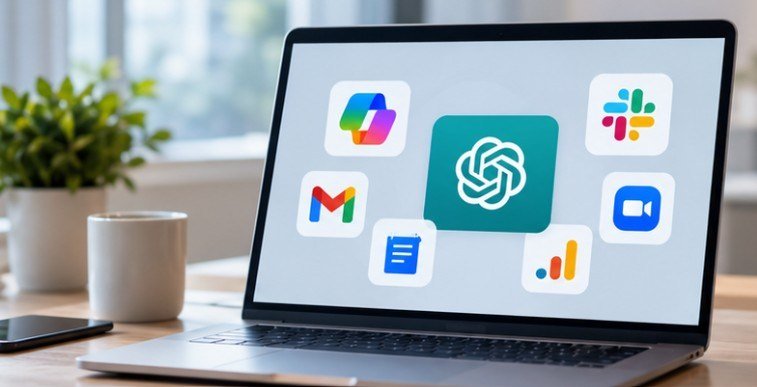
An agent capable of taking actions needs more scrutiny than an AI assistant that merely generates text. The National Institute of Standards and Technology recommends managing AI risk throughout design, development, deployment, use, and evaluation rather than treating risk assessment as a one-time launch activity.
Agent systems introduce additional concerns because they may hold credentials, call external tools, process untrusted content, or make sequences of decisions without constant supervision.
The OWASP Agentic Security Initiative now focuses specifically on risks affecting autonomous and multi-step AI workflows, including control, tool access, and agent security.
UC Berkeley researchers have also highlighted risks involving unintended data disclosure, prompt injection, excessive permissions, and unsafe actions in browser-based agents.
That means custom development should not automatically be interpreted as “more secure.” Customization gives you more control, but your organization must actually design, test, monitor, and maintain those controls.
The Five-Question Test Before You Build
A simple decision process can prevent expensive overengineering.
1. Is the workflow genuinely proprietary?
If competitors perform essentially the same task using the same inputs, buying an existing tool is usually more economical.
Custom development becomes more defensible when your process contains valuable rules, internal knowledge, unique data, or specialized decision logic.
2. Does the AI need to act, or only assist?
Generating a draft is low autonomy. Changing customer records, approving transactions, modifying production systems, or contacting external parties represents much higher autonomy. Greater authority requires stronger access controls, testing, monitoring, and human oversight.
3. How many systems must it coordinate?
A tool that reads one knowledge base is relatively simple. An agent that moves between a CRM, ERP, email platform, internal database, ticketing system, and proprietary API is an integration project. Complexity often makes custom orchestration more valuable, but it also increases maintenance.
4. What happens when the agent is wrong?
Estimate the cost of failure. A weak blog draft may waste 20 minutes. An incorrect refund, compliance decision, financial calculation, or production change could cost thousands of dollars or create legal exposure. Higher-consequence workflows need tighter evaluation and approval boundaries.
5. Can you maintain it after launch?
Models change. APIs change. business rules change. Security threats change. An AI agent is therefore closer to a living software product than a one-time automation project.
Stanford’s AI Index also shows why continual evaluation matters: agent performance has improved rapidly, but AI systems still demonstrate substantial reliability gaps on complex computer-use tasks.
The Hybrid Model Will Fit Many Businesses Better

The choice does not need to be binary. A company might use packaged AI for meeting summaries, writing support, CRM enrichment, and coding assistance while developing a custom agent for its most valuable operational workflow.
This approach keeps commodity capabilities inexpensive while concentrating engineering investment on areas that competitors cannot easily reproduce. It also allows teams to validate a workflow before committing significant resources to custom architecture.
FAQ
1. Is custom AI agent development always better than off-the-shelf AI?
No. Custom development makes sense when proprietary workflows, integrations, security requirements, or competitive differentiation justify the additional engineering and maintenance.
2. Are off-the-shelf AI tools cheaper?
They usually cost less initially, but integration work, usage fees, manual workarounds, and vendor limitations can increase the true long-term cost.
3. When should a company replace an off-the-shelf tool?
Consider custom development when platform limitations repeatedly require manual intervention, prevent important integrations, create governance problems, or block a high-value business process.
4. Can companies combine custom agents with existing AI products?
Yes. A hybrid architecture often works well: packaged products handle standardized tasks while custom agents automate proprietary or strategically important workflows.
Final Thoughts
The most expensive AI system is not necessarily the one with the largest development budget. It is the system that solves the wrong problem.
The debate around custom AI agent development vs off the shelf AI tools becomes easier once businesses separate commodity automation from proprietary operations. Buy what the market has already standardized. Build where your processes, data, integrations, or decision logic genuinely make your company different.
And before giving an agent more authority, measure the consequences of failure as carefully as the promised productivity gains. AI autonomy can create extraordinary leverage, but leverage magnifies mistakes just as quickly as it magnifies efficiency.