

A startup can pay for cloud servers all month even when nobody is using them. That quiet waste can drain thousands of dollars from a growing company’s operating budget.
Understanding how to reduce cloud infrastructure costs for startups begins with identifying what your business actually needs rather than paying for everything it has provisioned.
The solution is not necessarily switching providers or rebuilding your application. Right-sizing servers, automating resource scheduling, managing storage, and choosing better pricing models can reduce unnecessary spending while preserving performance.
Here’s how founders and engineering teams can take control of cloud expenses without compromising their ability to scale.
Find the Infrastructure Waste Before Making Changes
Cost optimization should begin with a detailed review of existing cloud services.
Examine Billing and Resource Utilization
Start by reviewing the previous 30–90 days of billing information through AWS Cost Explorer, Azure Cost Management, or Google Cloud Billing.
Identify which services generate the largest expenses and compare those costs against actual usage.
Look particularly for:
- Virtual machines consistently operating at low CPU utilization.
- Unused storage volumes and obsolete snapshots.
- Development servers running overnight.
- Databases provisioned beyond current requirements.
- Unexpected outbound data transfer charges.
CPU usage alone cannot determine whether a server is oversized. Memory consumption, disk performance, and traffic spikes also matter.
Assign Ownership to Cloud Resources
Apply consistent labels identifying each resource’s application, environment, owner, and department.
This makes it easier to distinguish necessary production expenses from forgotten experiments.
For Kubernetes environments, OpenCost offers open-source monitoring that allocates infrastructure spending down to container workloads. Ownership also creates accountability when engineers introduce new services.
Reduce Server Expenses Without Sacrificing Performance
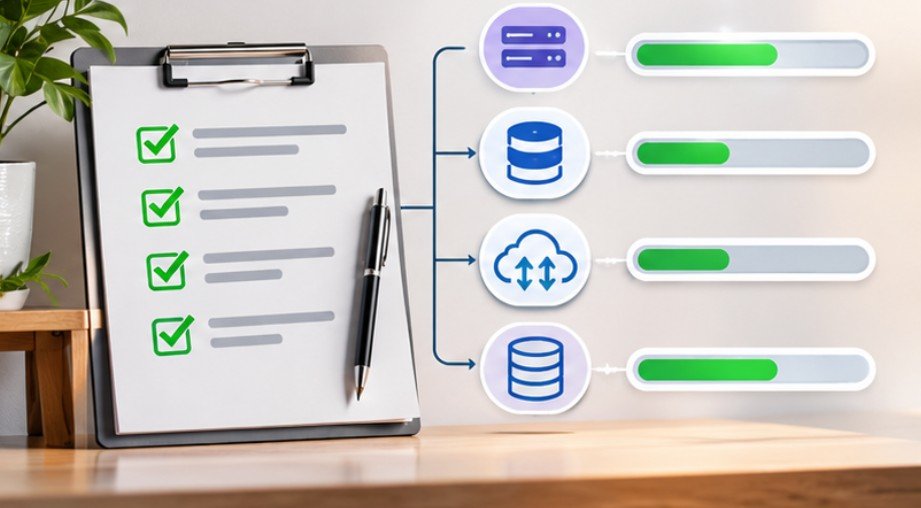
Compute resources frequently offer immediate opportunities for savings.
Right-Size Virtual Machines
Developers sometimes choose powerful instances to avoid performance problems during launch. Those configurations can remain unchanged long after actual requirements become clear.
Review historical CPU, memory, and network usage before reducing capacity.
For example, a startup running an instance costing $160 monthly might find that a smaller $90 configuration handles its normal traffic.
Switching four comparable instances would save $280 monthly, assuming performance remains acceptable.
Test changes under realistic peak loads before deploying them.
Evaluate Modern Processors
Newer processor generations can provide better price-to-performance ratios.
AWS Graviton instances, for example, may reduce computing expenses for compatible applications using ARM64 architecture.
However, teams must verify software dependencies, container images, and application performance before migrating.
A cheaper instance offers little value if compatibility problems increase development expenses.
Stop Paying for Idle Development Environments

Development and staging systems rarely require the same availability as customer-facing applications.
A test environment used eight hours daily on weekdays does not necessarily need to operate continuously.
Scheduling that environment for 40 hours weekly instead of 168 can reduce its running compute hours by approximately 76%.
Actual savings depend on billing rules, persistent storage, and associated services.
Automate Shutdowns and Scaling
Configure scheduled shutdowns for non-production instances and automatic startup before working hours.
Production applications can use autoscaling to adjust capacity when demand increases or decreases.
For containerized systems, the Cloud Native Computing Foundation explains how KEDA and Karpenter support workload scaling and more efficient infrastructure provisioning.
Event-driven applications may scale to zero when idle, although startup delays make this unsuitable for every workload.
Choose Cloud Pricing Models Based on Demand
Not every application requires expensive on-demand computing.
Reserve Capacity for Predictable Workloads
AWS Savings Plans, Reserved Instances, and comparable provider commitments can lower rates for predictable usage.
However, commitments can become liabilities when workloads shrink or architecture changes. Measure stable baseline demand before purchasing discounts.
Use Spot Instances for Flexible Tasks
Spot or interruptible computing is particularly useful for workloads that tolerate interruption.
Suitable examples include automated testing, background processing, data analysis, and certain machine-learning jobs.
Customer-facing databases and critical applications generally need more dependable capacity. The important distinction is whether a workload can restart safely without losing essential information.
Control Storage, Database, and Network Charges

Cloud bills extend well beyond virtual machines.
Cloud expenses are only one part of the technology investment required to operate an online business. Businesses handling digital transactions must also account for payment processing infrastructure, integration requirements, security, and ongoing operational costs. Understanding how to integrate a payment gateway into a business website can help startups evaluate the additional technology requirements involved in accepting online payments and maintaining a reliable digital business infrastructure.
Storage, managed databases, logging platforms, and network transfers can collectively become substantial expenses.
Apply Storage Lifecycle Policies
Move rarely accessed files to lower-cost storage classes when retrieval requirements permit.
Delete redundant backups and snapshots only after verifying retention requirements.
Review database storage allocation, automated backups, and transaction logs.
Lower-cost storage is not always cheaper overall because retrieval fees, minimum retention periods, and access frequency influence total expenses.
Reduce Data Transfer Expenses
Transferring information between regions, availability zones, or external networks may generate additional charges.
Keep frequently communicating services geographically close when architecture permits.
Use content delivery networks to cache appropriate static content near customers, reducing repeated requests to origin servers.
Evaluate total pricing before introducing additional networking services.
Review Database and Logging Costs
Managed databases may be oversized even when application servers are efficient. Review database utilization, expensive queries, and unnecessary replicas.
Limit excessive debug logging, establish suitable retention periods, and archive important records appropriately. Avoid deleting security or compliance records simply to reduce expenses.
Make Cloud Cost Management a Weekly Habit
Reducing expenses once is useful, but keeping them controlled requires consistent monitoring. The FinOps Foundation’s unit economics guidance recommends connecting technology spending to measurable business activity, such as transactions or customers served.
For startups, tracking infrastructure cost per active customer provides more insight than monitoring the total bill alone.
Tracking costs against measurable business outcomes helps startups understand whether their spending is generating meaningful value. The same principle applies to marketing investments, where businesses need to evaluate campaign expenses against the revenue they generate across different channels. Learn how to track advertising return on spend across digital platforms to understand how performance measurement can help businesses evaluate marketing efficiency and make more informed budget allocation decisions.
Set spending budgets and alerts, then review unusual increases weekly.
Effective cost management involves more than monitoring infrastructure usage; businesses must also control the operational expenses associated with software, services, and internal processes. Automating financial workflows can improve expense visibility, reduce manual administrative work, and make budget oversight more efficient.
Learn how to automate invoice approval workflows for small businesses to understand how structured approvals and automated invoice tracking can strengthen financial control.
The Green Software Foundation also highlights the benefits of matching virtual machine capacity to actual utilization, potentially reducing both spending and resource consumption.
Frequently Asked Questions
1. What is the fastest way to reduce startup cloud expenses?
Start by shutting down unused development environments, removing abandoned resources, and reviewing oversized virtual machines. These improvements often require fewer architectural changes.
2. Can startups reduce cloud costs without affecting performance?
Yes. Usage monitoring, autoscaling, storage optimization, and appropriate pricing plans can reduce waste while maintaining performance when properly tested.
3. Which cloud services are best for small startup budgets?
AWS, Microsoft Azure, and Google Cloud provide flexible pricing, startup programs, and cost-monitoring tools. Compare workload requirements, available credits, and long-term costs.
4. How often should startups review cloud spending?
Review major expenses weekly and perform a detailed optimization audit monthly. Configure automated budget alerts to identify unusual charges between reviews.
The Smartest Savings Come From Better Decisions
Cloud infrastructure should help a startup grow, not quietly consume the capital needed to reach its next milestone.
I recommend beginning with one billing report, identifying the largest unnecessary expense, and fixing that problem before introducing complicated optimization tools.
For founders exploring how to reduce cloud infrastructure costs for startups, the greatest opportunities often come from ordinary improvements: eliminating idle resources, selecting appropriate computing capacity, and building visibility into daily spending.
Not every expensive service is wasteful. Reliable infrastructure protects revenue, customer trust, and productivity.
The goal is not the smallest possible cloud bill. It is the lowest sustainable cost for delivering a dependable product.