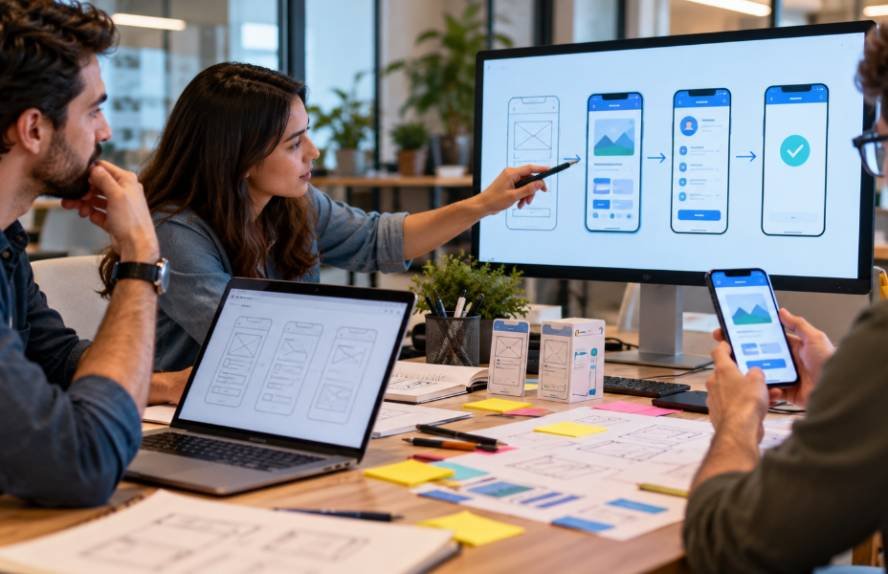
Turning a promising software idea into a product people actually want takes more than strong coding. I have seen product concepts look convincing on paper, only to reveal confusing workflows, missing requirements, or technical limitations once users begin interacting with them.
That is why I consider the software prototyping process one of the most valuable stages in early product development. It gives teams a practical way to test how a product should work before committing heavily to engineering. By creating an early model, gathering user feedback, and refining key interactions, businesses can catch costly mistakes sooner and move into development with greater confidence.
For US startups, SaaS companies, and enterprise product teams, this approach can make the path from concept to launch more focused, efficient, and evidence-driven.
What Is Software Prototyping in Product Development?
Software prototyping is an iterative, user-centered practice within the software development life cycle, or SDLC. Teams create an early version of an application so users and stakeholders can understand how the proposed product might look, behave, and solve a problem.
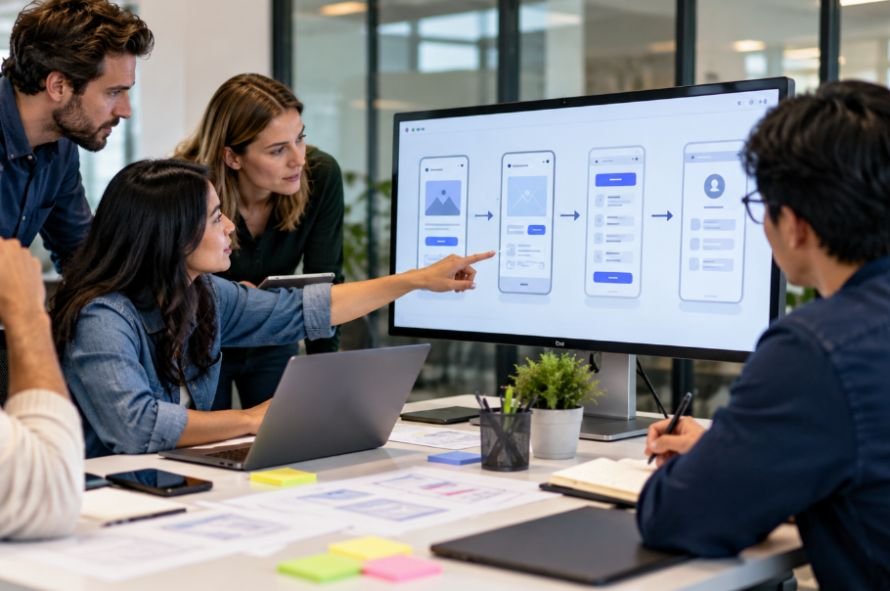
A prototype may be as simple as a clickable wireframe or as sophisticated as a realistic interface connected to simulated data.
Prototyping becomes especially useful when requirements remain vague, frequently change, or involve experimental technology. Instead of waiting until launch to discover major problems, teams can identify them while changes are still relatively inexpensive.
What Are the Six Steps in Software Prototyping?
A structured workflow normally moves through six connected stages.
1. Gather and Analyze Product Requirements
The team starts by defining the software’s main business goals, target audience, essential features, and primary user tasks.
I recommend focusing on the requirements that matter most rather than documenting every possible detail. Customer interviews, competitor analysis, stakeholder discussions, market research, and product discovery can help teams understand what the product needs to accomplish.
2. Create a Quick Design
Designers translate the initial requirements into basic layouts and user journeys.
Early designs may include sketches, interface diagrams, navigation structures, or wireframes. The priority is usually the user experience rather than complete backend architecture.
For example, a US SaaS company developing an invoicing platform might map the journey from registration to creating an invoice, adding a customer, collecting payment, and viewing financial reports.
3. Build the Prototype
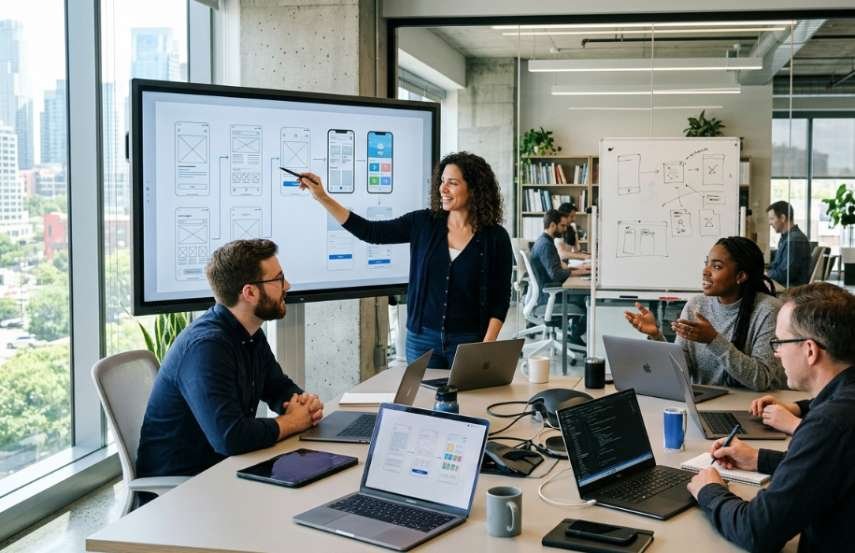
The quick design becomes a usable model.
Low-fidelity prototypes work well for testing structure and navigation. High-fidelity prototypes include realistic screens, visual design, content, interactions, and simulated data.
If the product relies on an uncertain technology, developers may also create a proof of concept to test an API, AI feature, data architecture, integration, or technical limitation.
4. Let Users and Stakeholders Evaluate It
Real users, business analysts, product managers, and stakeholders interact with the prototype.
The goal is not simply to ask whether they like the design. Instead, teams should observe whether users can complete important tasks, understand navigation, find necessary features, and move through workflows without unnecessary friction.
These sessions can expose logic gaps, missing functionality, confusing labels, and unrealistic business assumptions.
5. Refine and Retest the Product
The design and engineering teams evaluate feedback and modify the prototype.
This may mean simplifying an interface, changing navigation, adding a missing step, removing an unnecessary feature, or reconsidering part of the product concept.
When prototype interactions or features behave unexpectedly, developers can apply these tips for debugging code effectively to trace errors, identify root causes, and confirm that fixes work as intended before moving forward.
The software prototyping process is intentionally iterative. Teams may repeat the build, evaluation, and refinement stages several times until the biggest uncertainties have been resolved.
6. Move Into Full Product Development
Once stakeholders approve the prototype and the core experience has been validated, teams can move into production.
Developers begin creating real application architecture, databases, APIs, authentication systems, security controls, backend services, automated tests, and deployment workflows.
For products that rely on mobile experiences, teams should also follow mobile app backend development best practices to plan reliable APIs, secure data handling, scalable infrastructure, and efficient communication between the application and its server.
The approved prototype, user flows, research findings, product requirements, and acceptance criteria can then guide implementation.
Which Software Prototyping Method Should You Use?
Different software products require different approaches.
Rapid Throwaway Prototyping
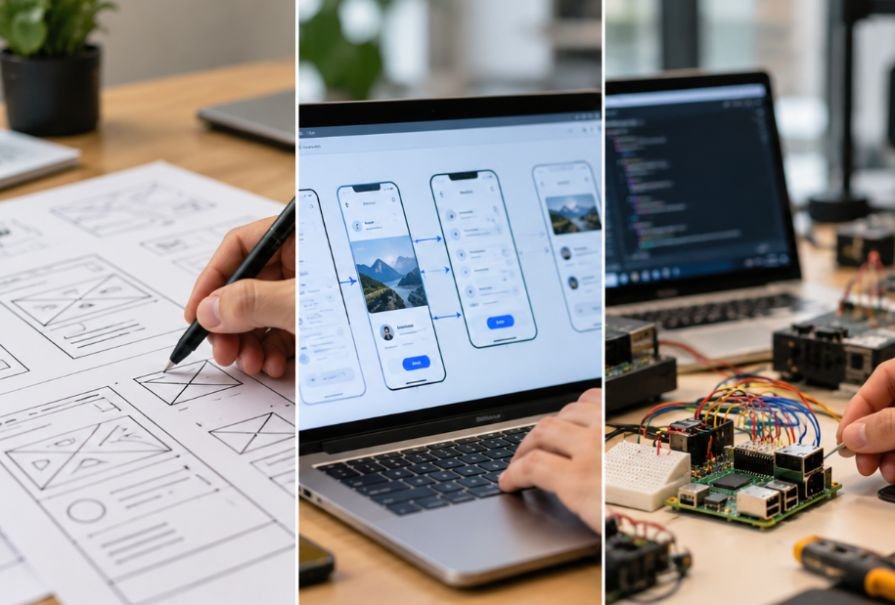
Rapid throwaway prototyping works best when a team wants to test a risky idea or answer a specific question quickly.
The prototype is intentionally temporary. Once the team learns what it needs, the model is discarded, and engineers build production-quality software from scratch.
This approach keeps early investment low but means prototype code usually provides no architectural reuse.
Evolutionary Prototyping
Evolutionary prototyping starts with a structured working version that gradually develops into the final product.
Teams continuously refine, refactor, and expand it based on feedback.
This method works well when requirements will continue changing, although weak technical discipline can create architectural bloat, scope creep, or poor documentation.
Incremental Prototyping
Incremental prototyping divides a complex system into separate functional modules.
Teams can prototype components simultaneously and later combine them into one cohesive platform.
Large enterprise systems often benefit from this method, although integration testing, shared data structures, and dependencies can become challenging.
Extreme Prototyping
Extreme prototyping is particularly useful for web applications.
Teams typically create static HTML or interface screens first, add simulated service or data interactions next, and finally connect the interface to real backend services.
It allows strong UI validation but should not cause teams to overlook backend performance, security, or business logic.
How Are Wireframes, Prototypes, POCs, and MVPs Different?
A wireframe mainly shows layout and information hierarchy. A prototype adds realistic interaction. A proof of concept tests whether a technical idea can work. An MVP is functional software that real customers can use.
Understanding these differences prevents teams from treating a polished prototype as a finished product.
An attractive interface may still contain untested business assumptions or technical limitations.
How Is AI Changing Software Prototyping?
AI-assisted tools are making early product development significantly faster.
Teams can generate interface concepts, user flows, sample content, code snippets, mock data, and design variations from natural-language prompts.
For products intended to deliver app-like functionality through a browser, a progressive web apps implementation guide can help teams explore features such as responsive interfaces, offline access, and service-worker functionality during early product planning.
However, faster creation does not eliminate the need for research.
AI can produce a convincing interface while still solving the wrong customer problem. Human usability testing, product validation, accessibility reviews, and technical evaluation remain essential.
What Common Prototyping Mistakes Should Teams Avoid?
One of the biggest mistakes is polishing the visual design before validating the core workflow.
Teams can also waste time by prototyping every planned feature instead of concentrating on high-risk assumptions and essential user journeys.
Another mistake is relying only on employees or executives for feedback. People already familiar with the project may understand workflows that new customers find confusing.
Finally, teams should avoid treating every user suggestion as a feature requirement. Look for repeated behavioral patterns and understand the underlying problem before making changes.
When Is a Prototype Ready to Become an MVP?
I usually recommend moving toward an MVP (A minimum viable product) when users can complete the primary journey, major usability problems have been addressed, technical feasibility is reasonably clear, essential requirements are documented, and stakeholders understand what the first release should accomplish.
At that point, the software prototyping process has reduced enough uncertainty for the team to invest confidently in production development.
Frequently Asked Questions
1. How long does it take to create a software prototype?
A basic wireframe may take several days, while a detailed interactive prototype can require several weeks. Complexity, research, integrations, feedback cycles, and the number of user journeys all affect the timeline.
2. Does a software prototype require coding?
Not always. Many UX prototypes use no-code or design tools. Code becomes more useful when teams need to test technical feasibility, integrations, advanced interactions, or real data behavior.
3. Which prototyping model is best for changing requirements?
Evolutionary prototyping often works well when requirements continue to evolve because teams can progressively refine the product instead of discarding every version.
4. Can prototype code be used in the final product?
Sometimes, particularly with evolutionary prototypes. However, experimental code should undergo architecture, security, performance, and maintainability reviews before entering a production environment.
5. Is prototyping useful for enterprise software?
Yes. Enterprise teams can use incremental prototypes to validate individual modules, workflows, integrations, and stakeholder requirements before combining them into a larger system.
Final Thoughts
When I approach a new software product, I see prototyping as much more than an early design exercise. It is a practical way to replace assumptions with evidence before development becomes expensive.
For US businesses, startups, and product teams, the strongest approach combines requirements analysis, user-centered design, technical validation, stakeholder feedback, iterative testing, and disciplined engineering.
Finding a serious usability or architecture problem during prototyping is far better than discovering it after months of production development. That early learning can save money, improve product quality, and give development teams a much clearer path from concept to launch.