How AI Is Changing Website Cybersecurity Through Smarter Threat Detection
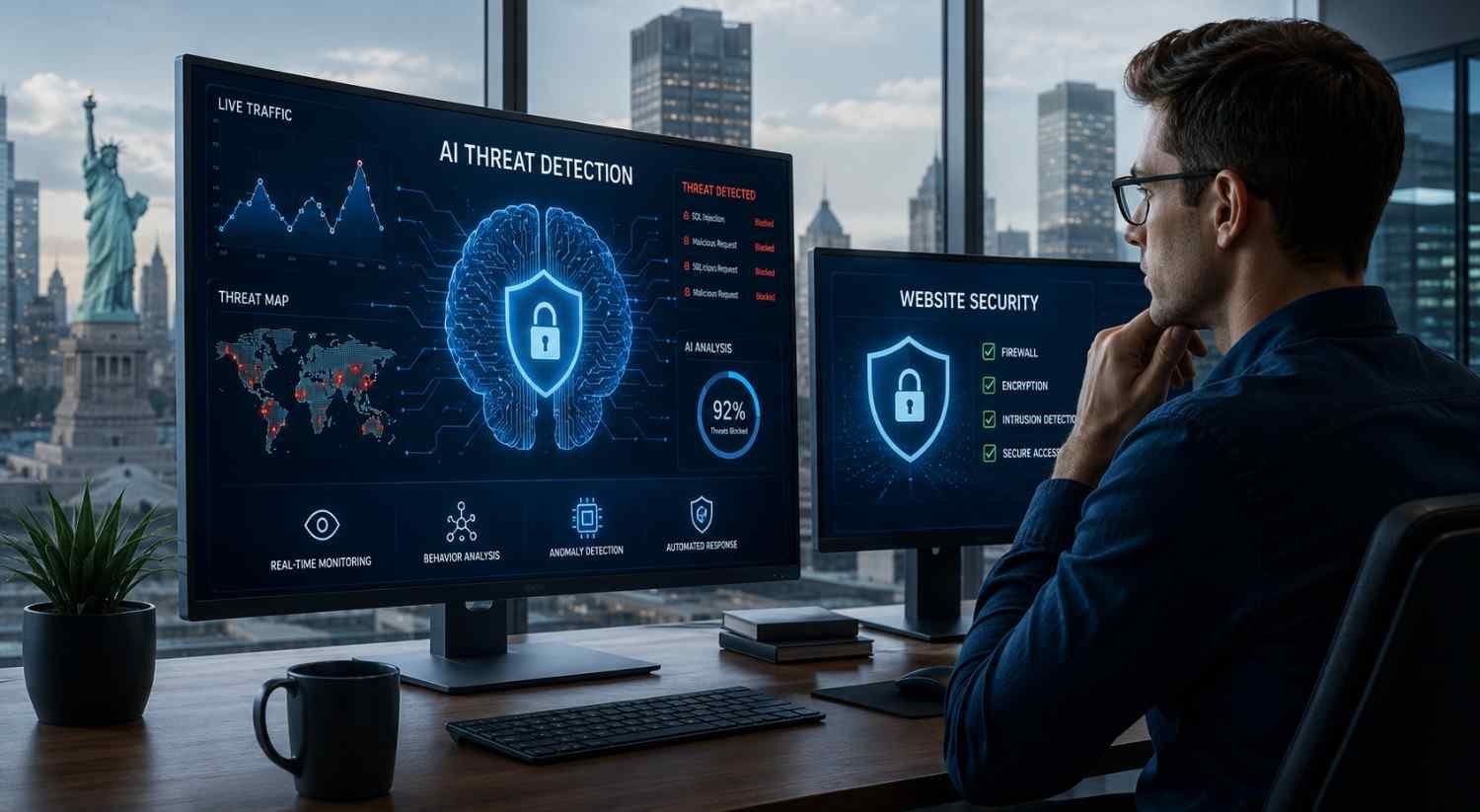
I still remember when website security felt straightforward. A firewall, antivirus software, regular updates, and a strong password policy seemed enough to keep most threats away. Looking back, that confidence feels almost outdated. The way websites operate today has changed, and unfortunately, so have the people trying to exploit them. Every new feature, integration, and online service creates another opportunity for attackers to find a weakness.
What I’ve noticed over the past few years is that businesses aren’t just adding more security tools anymore. They’re looking for smarter ways to defend their websites because traditional methods simply can’t keep up with the speed of modern cyberattacks. That’s where artificial intelligence is making a real difference. Instead of waiting for something to go wrong, AI is helping websites recognize suspicious activity before it becomes a serious problem.
Why Traditional Website Security Is No Longer Enough

For years, website cybersecurity relied heavily on predefined rules. Security systems looked for known malware signatures, blocked suspicious IP addresses, and alerted administrators whenever something matched an existing threat database. That approach still has value, but today’s attacks rarely follow predictable patterns.
Cybercriminals constantly modify malware, automate attacks, and exploit vulnerabilities within hours of discovering them. Waiting for security databases to update creates a dangerous gap between identifying a threat and stopping it.
Artificial intelligence changes that approach by focusing less on what an attack looks like and more on how it behaves. That small difference allows websites to detect suspicious activity much earlier.
AI Learns What Normal Website Activity Looks Like
One of the biggest strengths of AI website security is behavioral analytics.
Instead of treating every visitor the same, AI studies how a website normally operates. It learns traffic patterns, user behavior, login activity, data transfers, and resource usage over time. Once it understands what’s considered normal, unusual behavior becomes much easier to identify.
For example, if a user account suddenly attempts thousands of login requests or large amounts of customer information begin moving outside normal business hours, AI recognizes that behavior as unusual even if the attack has never been seen before.
This ability helps security teams respond to threats that traditional rule-based systems might completely overlook.
Detecting Threats Before They Become Breaches

Perhaps the biggest advantage of artificial intelligence is its ability to recognize emerging threats instead of waiting for known signatures.
Zero-day attacks are a perfect example. These attacks exploit newly discovered vulnerabilities before software developers have released security patches. Since there are no existing signatures to compare against, traditional tools often struggle to detect them.
AI analyzes characteristics such as file behavior, system activity, and network interactions rather than relying only on historical attack data. When something behaves like malicious software, the system can raise an alert even if that exact threat has never appeared before.
That proactive approach significantly improves cyber resilience for modern websites.
Smarter Protection Against Bots and Automated Attacks
Not every cyberattack involves sophisticated malware. Many websites face constant pressure from automated bots attempting credential stuffing, spam submissions, fake account creation, or distributed denial-of-service (DDoS) attacks.
AI makes it much easier to separate genuine visitors from automated traffic.
Instead of simply counting requests, machine learning evaluates browsing behavior, request timing, API activity, and interaction patterns. These insights allow security systems to block malicious bots while reducing unnecessary interruptions for legitimate users.
The result is better website protection without creating a frustrating experience for real customers.
AI Is Improving Security Before Websites Go Live

Artificial intelligence isn’t only protecting websites after launch. It’s also helping developers write safer code from the beginning.
Modern AI-powered development tools can scan application code repositories, identify insecure coding practices, detect exposed credentials, and highlight potential vulnerabilities during development. Developers can fix many security issues before a website reaches production.
Finding problems early reduces expensive emergency fixes later while strengthening the overall security of the application.
Understanding how to protect customer data on your website also starts long before launch. Building secure applications from the beginning is often more effective than trying to patch weaknesses after they’re discovered.
Reducing Alert Fatigue for Security Teams
Anyone responsible for website security knows that alerts can quickly become overwhelming.
Large websites generate thousands of security events every day. Many of them turn out to be harmless, making it difficult for analysts to identify genuine threats quickly.
Artificial intelligence helps prioritize alerts by analyzing context instead of treating every event equally. Rather than flooding security teams with notifications, AI highlights the incidents most likely to require immediate attention.
Reducing false positives allows cybersecurity professionals to spend more time investigating real risks instead of sorting through unnecessary warnings.
Automated Responses Are Changing Incident Management
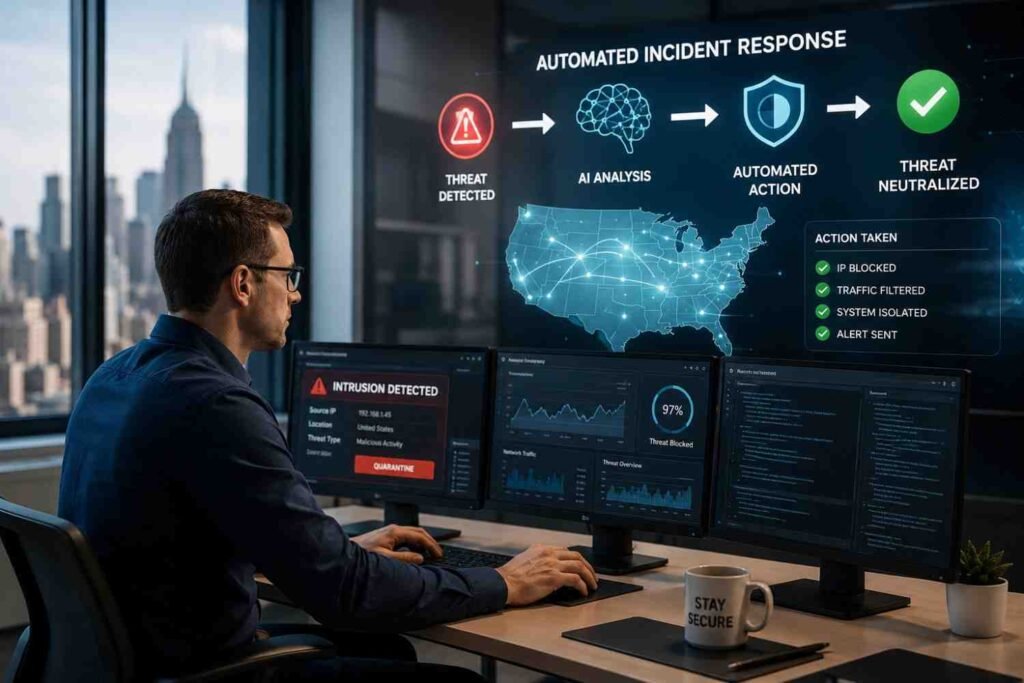
Speed matters during a cyberattack.
Many AI-powered cybersecurity platforms can automatically respond when they detect suspicious behavior. Depending on the organization’s security policies, the system may temporarily isolate a compromised server, block malicious traffic, update firewall rules, or suspend suspicious user sessions within seconds.
These automated actions don’t replace cybersecurity professionals. Instead, they give teams valuable time to investigate while limiting the damage an attacker can cause.
Human expertise still plays an essential role in reviewing incidents, improving security strategies, and making complex decisions that require context beyond machine analysis.
AI Is Powerful, but It Isn’t a Complete Security Strategy
Artificial intelligence has become one of the most valuable tools in website cybersecurity, but it’s not a replacement for good security practices.
Regular software updates, secure authentication, encrypted connections, vulnerability management, employee awareness, and reliable backups remain essential. AI works best when it strengthens an existing security framework instead of acting as the only line of defense.
The smartest organizations combine intelligent automation with experienced cybersecurity professionals who understand both technology and evolving attack methods.
FAQs: How AI Is Changing Website Cybersecurity Through Smarter Threat Detection
1. Can AI completely replace traditional cybersecurity tools?
No. AI improves detection and response, but firewalls, encryption, updates, backups, and human expertise remain essential parts of website security.
2. How does AI identify threats that haven’t been seen before?
AI studies behavior instead of relying only on known malware signatures, helping detect unusual activity that may indicate new attacks.
3. Does AI reduce false security alerts?
Yes. By analyzing context and behavior, AI filters routine activity and highlights incidents that are more likely to require immediate investigation.
4. Is AI website security suitable for small businesses?
Absolutely. Many modern security platforms include AI-powered features that help businesses improve protection without managing large cybersecurity teams.
Smarter Security Starts With Better Decisions
The biggest change AI has brought to website cybersecurity isn’t that it works faster than people. It’s that it helps security teams focus on the threats that truly matter while handling repetitive analysis in the background. That combination of speed, learning, and automation gives businesses a stronger chance of preventing attacks before they become costly incidents.
Technology will continue to evolve, but smart decisions and strong security habits will always remain the first line of defense.